.png)
I Kept Losing Toenails. Here’s What I Learned About Shoe Sizing for Ultras.

Updated: May 13
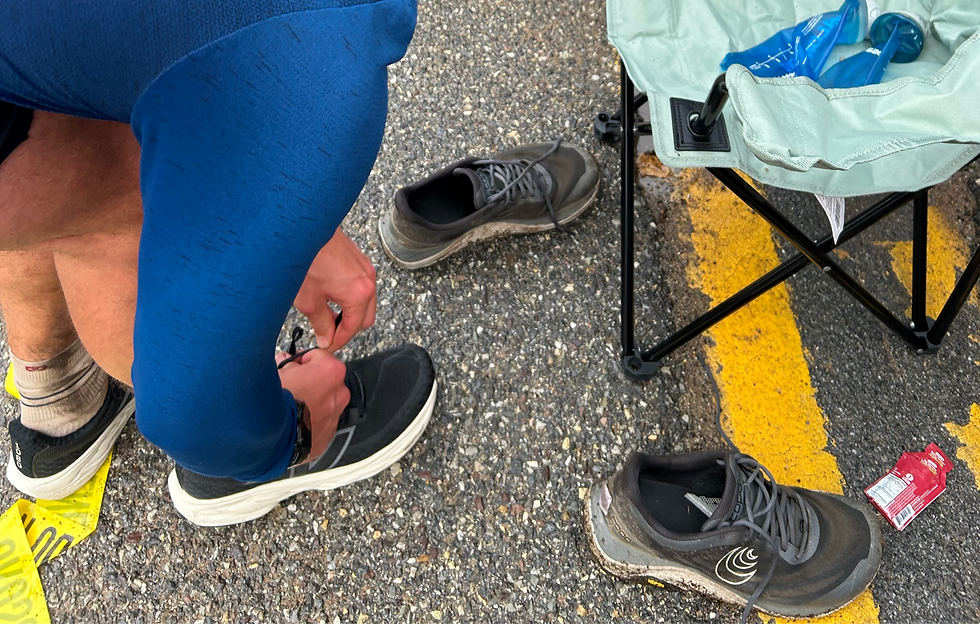
If you’ve run long enough, you already know this: your feet at mile 5 are not the same feet at mile 45.
After a series of races that absolutely trashed my feet, I decided to dig into what's actually happening during long efforts. How do blisters really form? Why does a shoe that feels fine in training fall apart on race day? What actually matters when picking the right fit?
Shoe sizing for long-distance running isn't just about comfort. It's about managing swelling, shear forces, downhill loading, and moisture over hours (or days). Get it wrong and you're not just uncomfortable; you're potentially DNF-ing. That makes shoe fit a genuine part of race preparation, not an afterthought.
For a deep dive, John Vonhof's Fixing Your Feet is the most comprehensive resource out there on footwear and foot care for endurance athletes. But for runners focused specifically on race-day shoe selection, here are the most important points to get your fit right.

Your Knowledge Needs to Evolve With Distance
I trashed my feet at Wy'East Wonder 50K. I lost two toenails and blamed my shoes. Then I did it again at JFK 50 Mile in a completely different brand. Three toenails, countless blisters.
When I toed the line at my next JFK 50 Mile (with freshly regrown toenails), I thought I was prepared: half-inch of toe space, a mid-race shoe swap to my trusty Speedgoats, fresh Injinji toe-socks, and gaiters... but I still trashed my feet. Two toenails gone, giant alien blisters (shoutout to the Amazon-overnighted Crocs that were the only things my feet fit into through the Denver International Airport post-race).
My coach kept telling me to size up. I thought I already had. What I finally understood three races too late was that I'd never updated my half marathon mindset for ultramarathon distances. A thumb's width isn't a universal rule, it's a starting point. Double the distance, add 7,000 feet of downhill, and the sizing scale shifts dramatically.
The basics you learn early in running work, until they don't. As distances grow longer and terrain gets tougher, what served you at the half marathon stage won't automatically hold at 50 miles. Your feet literally change shape as you age. Your shoe fit, like your training, needs to evolve with you.
Your Feet Don’t Stay the Same As You Age
Most runners assume their foot size is fixed once they're done growing, but it's not.
As Fixing Your Feet covers, feet continue changing well into adulthood. Ligaments lose stiffness, arches lower, the forefoot widens, and years of mileage increase foot splay. Even small changes in arch height can bump you up half a size. Add body weight fluctuations, pregnancy, or decades of trail running, and your size may be meaningfully different at 22 than at 32 or 42.
For ultrarunners especially, the more years you log on trail, the more your feet adapt, often meaning more surface area and more volume. If you haven't measured your feet in years, you may be running in a size that fits who you used to be. Next time you're in a running store, re-measure rather than assuming.
Your “normal shoe size” at age 22 may no longer be your shoe size at 32 or 42.
What's Happening to Your Feet During a Long Race
During marathons and ultras, several predictable things happen: your feet swell, your skin gets warm and wet, repetitive shear builds between skin layers, and downhill running drives your toes into the front of the shoe.
A key insight from Fixing Your Feet: blisters aren't caused primarily by surface rubbing. They're caused by repetitive shear stress within the layers of skin. Under load, epidermal layers experience horizontal displacement, and when that force exceeds tissue tolerance, the layers separate and fluid fills the gap. That's a blister!
Moisture dramatically lowers the threshold for this. Wet skin has reduced structural integrity, generates more friction, and deforms more easily under load. If your shoe is too tight once swelling kicks in, friction increases and tissue tolerance drops. Small problems compound fast.
The Short Answer: How Much Should You Size Up?
For most runners:
Half to Full Marathon: typically ½ size up from casual shoe size
50 mile to 100 mile races: often closer to a full size up
But again, that's a starting point, not a rule. The right answer depends on how your feet behave over time. The longer the event, the more cumulative swelling, shear, and downhill loading your feet absorb.
Key factors to consider:
Foot swelling: Your feet can swell up to 10–20% during long efforts.
Toe space: Your toes need room to splay naturally without hitting the front of the shoe.
Comfort: Proper fit reduces hotspots and pressure points that compound over miles.
Performance: Well-fitted shoes help maintain running form and reduce fatigue.
Sizing up accommodates these changes, but how much depends on the specific factors covered below.

What Should Drive Your Shoe Decision
1. How Much Do Your Feet Swell?
Some runners barely swell; others feel forefoot pressure by mile 20. If your shoe feels perfectly snug early in a long run, it may be too tight once swelling peaks. If your toes feel cramped late in long runs, you need more room.
2. Terrain Matters
Mountain ultras make downhill loading the real test. Every descent drives your foot forward and increases anterior shear (= a forward sliding force between two stacked structures, where the top part moves forward while the bottom stays put or moves backward). Without enough toe clearance and heel lockdown, you'll end up with black toenails. Toe box space and heel fit matter more than stack height.
3. Volume vs Length
When your forefoot is compressed, your toes can't splay naturally, soft tissue gets pushed against the shoe structure, and micro-movements occur with every stride. Those micro-movements accumulate shear over tens of thousands of steps, and often, a wider model solves more problems than jumping a full size. If your pinky or big toe always gets irritated, look at width first. Also remember that shoes curve at the front, so a roomier toe box from a different model or brand might solve your space issue without changing your overall shoe size.
4. Sock System
If you wear toe socks like Injinji (which are often recommended for runners prone to between-toe blisters) remember that they increase toe splay and overall forefoot width more than standard socks. This means that they may require more forefoot space on race day. Thicker socks for cold races have the same effect. Whatever you plan to race in, size and fit your shoes with those socks on.
Plan to size up about ½ size for a marathon and often closer to a full size for ultras.

A Practical Fit Standard
When trying on shoes:
Go at the end of the day, when your feet are at their largest.
Wear the exact socks you plan to race in.
Leave at least a thumb's width in front of your longest toe (more for longer races).
Wiggle your toes and confirm there's room vertically and laterally, not just forward.
Walk downhill in the store to check that your heel stays locked and toes don't slide forward.
Better yet, test them on a real run.
A shoe that feels perfect for 5 miles may be restrictive at hour 6. For 100-mile athletes, it's worth stashing a slightly roomier pair in a drop bag for the later stages, when swelling and moisture peak.
When testing out shoes, remember to wear the running socks you plan to wear for race day.
Downhill Is Where Bad Sizing Gets Exposed
Most toenail damage isn't caused by mileage, it's caused by descents. When you run downhill, your center of mass shifts. With inadequate toe clearance, repetitive impact loads the nail bed, leading to inflammation, hematoma, and eventually nail loss.
If you’re sliding forward in your shoe when running downhill:
Try a "heel lock" lacing pattern, before sizing up again.
Make sure your shoe has enough toe box depth.
Trim your nails short before race week and file any sharp edges.
Sizing and lacing work together to control shear. If you've lost multiple toenails in ultras, it's almost always a fit issue, but before jumping up in size, try the heel lock first. It may solve the problem without sacrificing overall shoe security.

Shoe Size Is Only Part of the System
Even the perfect size won’t save you if you ignore moisture and skin care.
Long races can mean:
Wet feet
Macerated skin
Increased blister susceptibility
As Fixing Your Feet details, macerated skin tolerates significantly less shear before structural failure. Wet skin softens, deforms more easily, and separates under lower loads, making blister prevention a whole-system problem, not just a sizing one.
Sizing works alongside:
Moisture-wicking socks and sock changes during long events
Proactive hotspot management
Even calluses (thick, uneven callus increases skin stress)
Clean shoes (gaiters are a great tool to help keep out sand and debris)
Short, filed toenails
If you feel a hotspot developing, stop and address it early. Five minutes at mile 30 can save your race at mile 80.
If you’ve lost multiple nails in ultras, it’s almost always a sizing or fit issue. But before sizing up your shoes excessively, try out a "heel lock" lacing pattern first.
When to Replace Your Running Shoes
Most running shoes last 300–500 miles, though technical terrain can shorten that.
Signs it's time for a new pair:
Worn or smooth lugs on the outsole
Noticeably reduced cushioning
New aches in your feet, knees, or hips
Visible creasing or damage in the upper
Don't wait until they fall apart. Replacing shoes before they lose their support is cheaper than a DNS.
Bottom Line
Shoe sizing for long-distance racing isn't about guessing; it's about preparing for what you know will happen: swelling, moisture, downhill loading, and tens of thousands of repetitive steps.
When trying on race-day shoes:
Wear the exact socks you plan to race in.
Make sure the toe box has enough space in length, width, and depth for swelling and natural toe splay.
Plan on roughly a half size up for marathons (often a full size for ultras) adjusted for how your feet typically respond.
Test a heel lock lacing pattern to reduce forward slide on descents. Any running store associate should be able to help with this.
The goal isn't just comfort in the store. That's important too, but durability deep into the race, when your feet are swollen, warm, and tired is crucial. Resize your feet often and choose the shoe that holds up at mile 40, 70, or 90, not the one that only feels good on fresh legs.
Join the movement and realize your potential.
Sign up below to join the Treeline Endurance community and receive updates on our latest posts and offers. You can also follow us on Instagram and Facebook.


Comments